Categories of Posts:
Recent Posts:
- 🏳️🌈Stand by Your Pride today! 📚
- 🥳April Releases from me and more! 📚
- 📚Queer Your Bookshelf for .99 cents! 🥳
- 📚Cover Reveal and last days to get free stories! 🥳
- 🖤Dark Romance for Friday the 13th 🖤
-
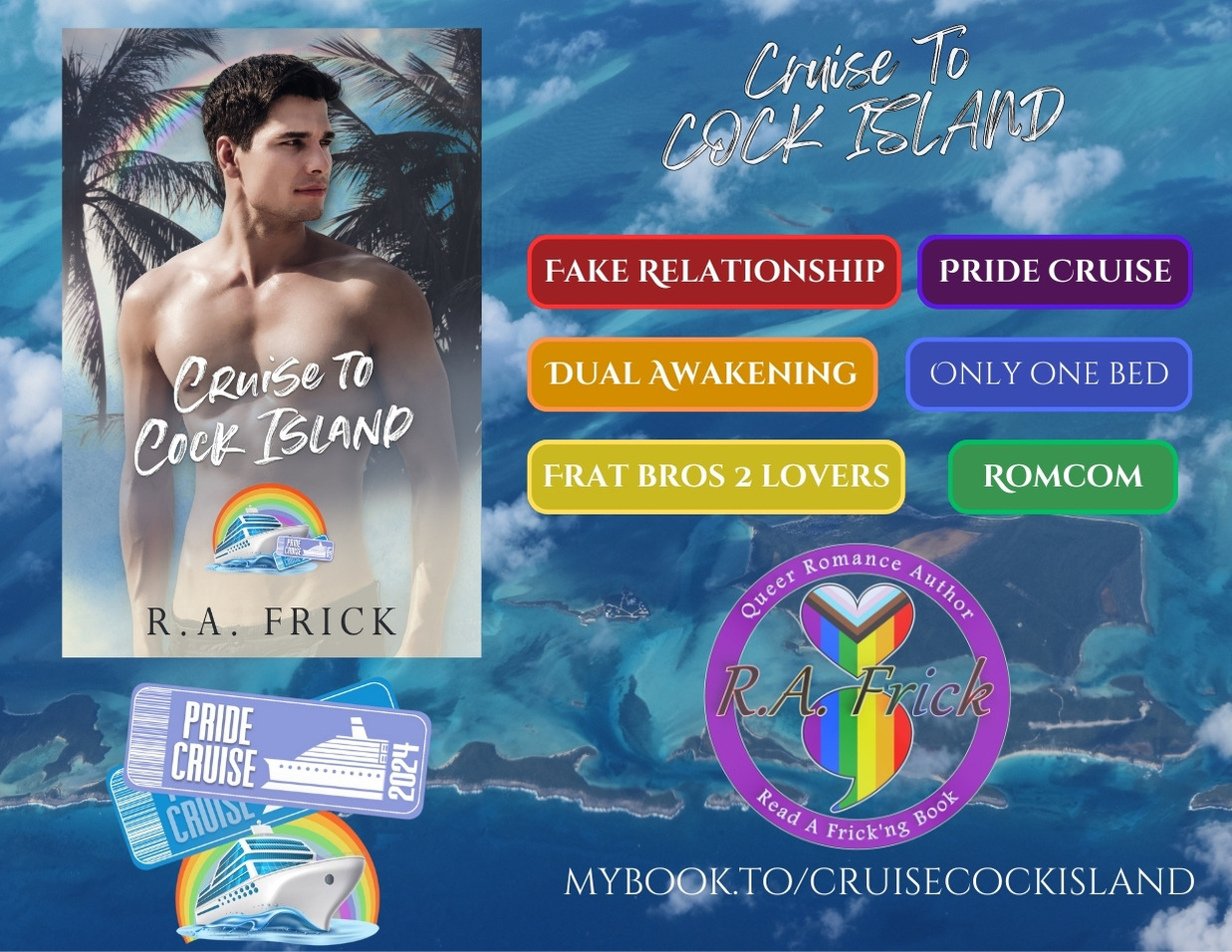
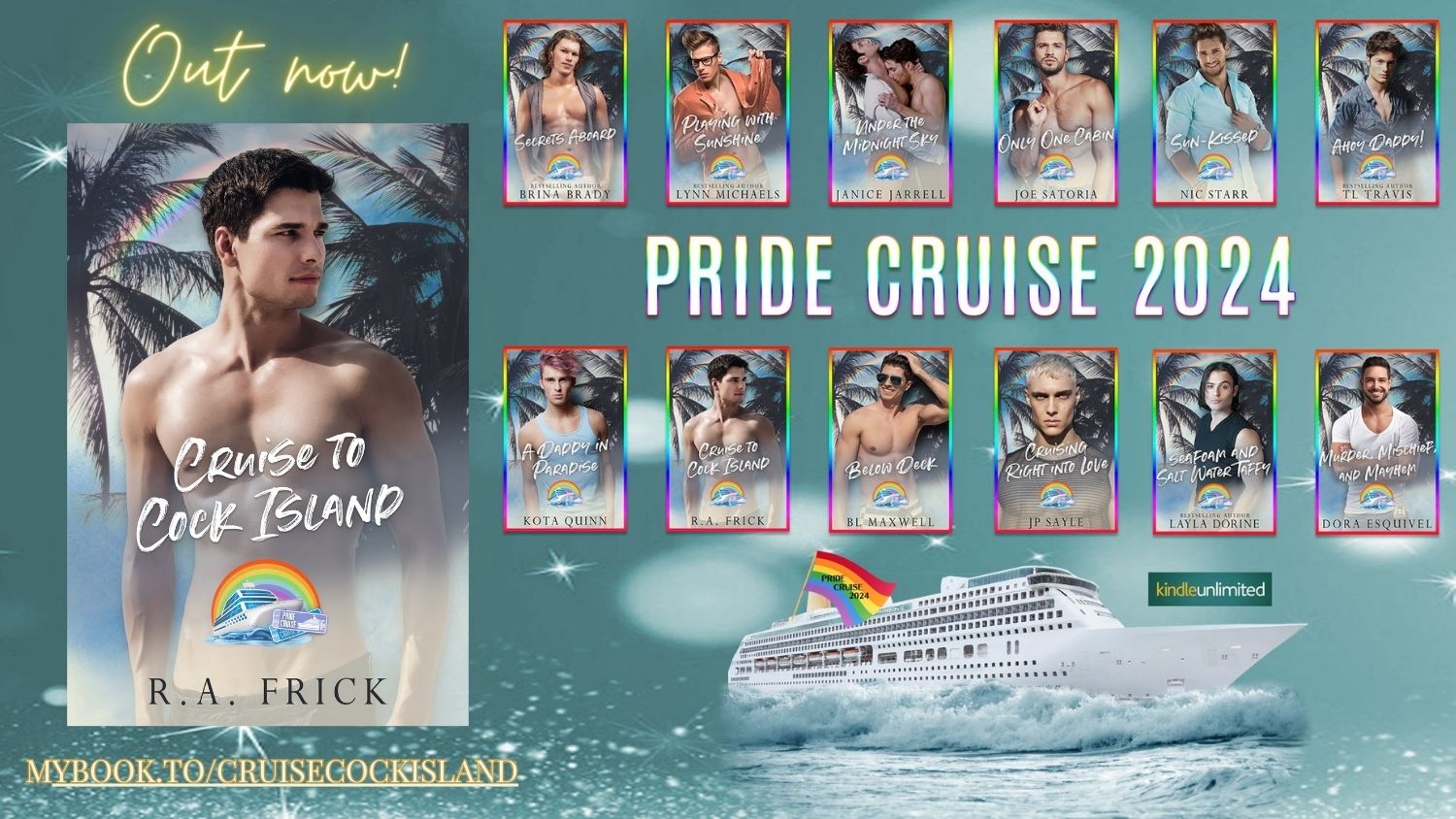
🛳️Ready for a Cruise to Cock Island? 🛳️
It’s Frick’ng Release day!
I can’t wait for you to read about these two best friends to lovers faking a relationship and discovering how much fun a Cruise to Cock Island can be!
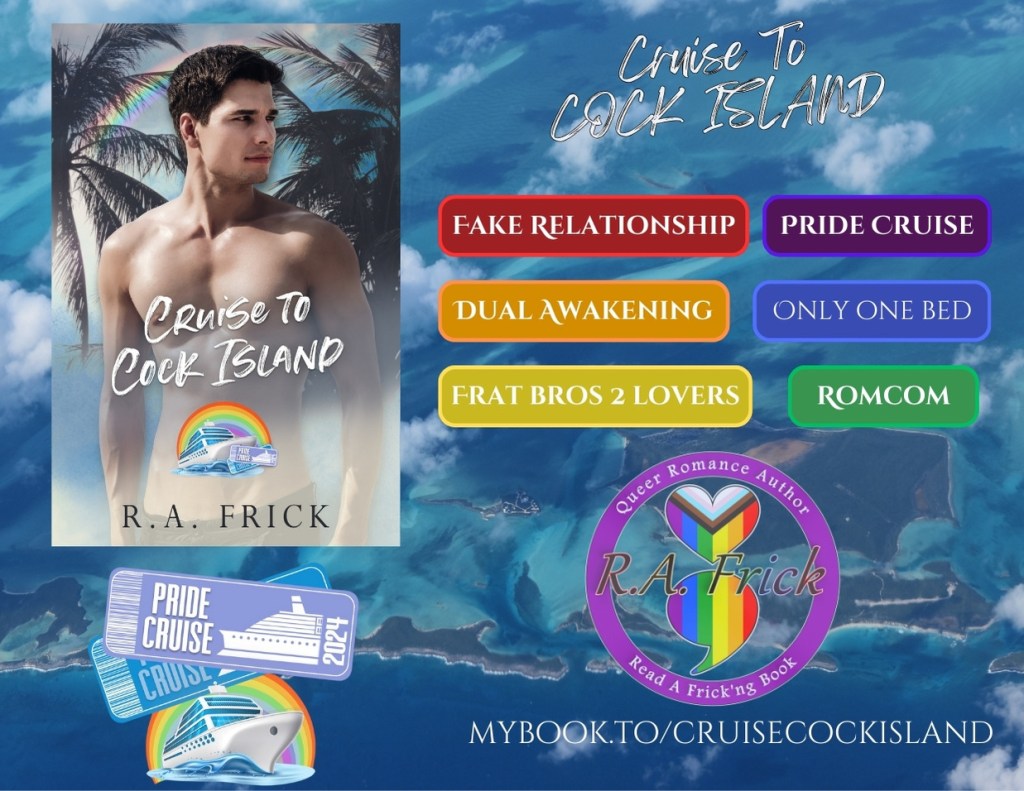
🏳️🌈Pride Cruise 2024: Cruise to Cock Island
On Paperback, eBook, and Kindle Unlimited: https://mybook.to/cruisecockisland
Blurb
Jamie
Four years in undergrad and two in law school have me over drunken trips to Mexico, so an adults-only cruise with my best friend sounds more relaxed and grown up. What I don’t expect is the cruise being Pride-themed. I always love messing with Teddy, though.
Teddy
When my best friend suggests celebrating being only one year away from finishing our law degrees with a Caribbean cruise, I jump at the chance for a quiet vacation. I’m less impressed when Jamie signs us up for a newlyweds game, but maybe it’s not all fake…
Take a cruise to Cock Island with two frat bros who get more than they bargain for when they pretend to be a couple on a pride-themed cruise… especially since neither of them is gay!
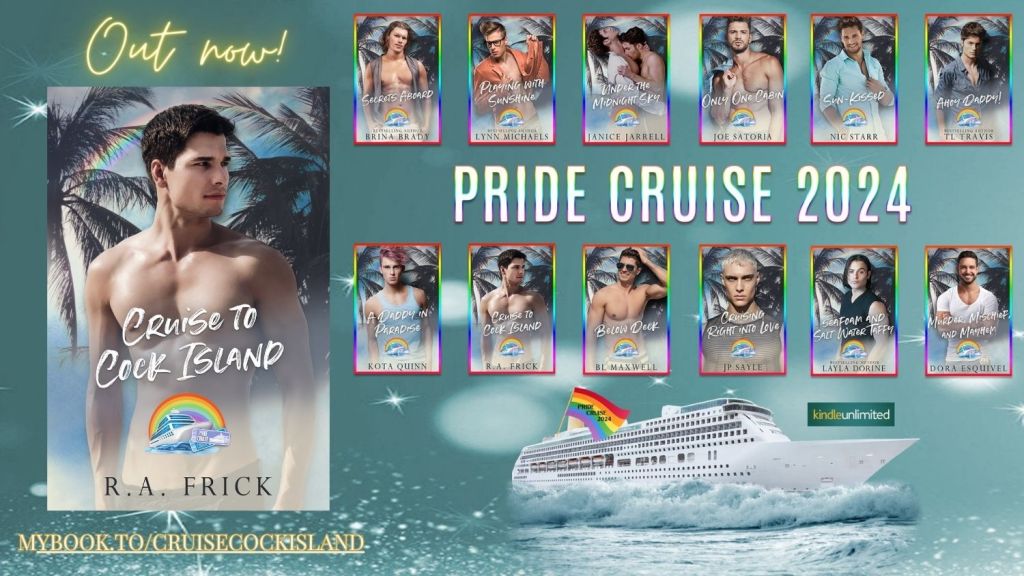
🛳️Pride Cruise 2024!
Where the water is crisp, the men are HOT, and the party has started! Each book is a standalone but feel free and dive in and binge them all. You won’t want to miss a second of their naughty antics. If you think they’re silly when the sun is up, just wait until it goes down.
🛳️Don’t forget to check out the Pride Cruise books already out:
Brina Brady: Secrets Aboard!
Lynn Michaels: Playing with Sunshine
Janice Jarrell: Under the Midnight Sky
Joe Satoria: Only One Cabin
Nic Starr: Sun-Kissed
TL Travis: Ahoy Daddy!🛳️And the rest up next to round out Pride Month:
BL Maxwell: Below Deck
JP Sayle: Cruising Right Into Love
Layla Dorine: Seafoam and Salt Water Taffy
Dora Esquivel: Murder, Mischief, And Mayhem
Kota Quinn: A Daddy in Paradise🛳️Series page: https://www.amazon.com/dp/B0CLKWB4JJ
Make sure to follow this site and my Facebook group so you get updates first!
- Facebook: https://www.facebook.com/groups/queerfricktion
- Linktree: https://linktr.ee/raauthor
- Website/Newsletter: https://rafrickauthor.com/
- Instagram: https://www.instagram.com/@rafrickauthor
Stay Kinky
R.A. Frick
-
🏳️🌈Packed Pride Month🏳️🌈
Happy Frick’ng Friday 🏳️🌈
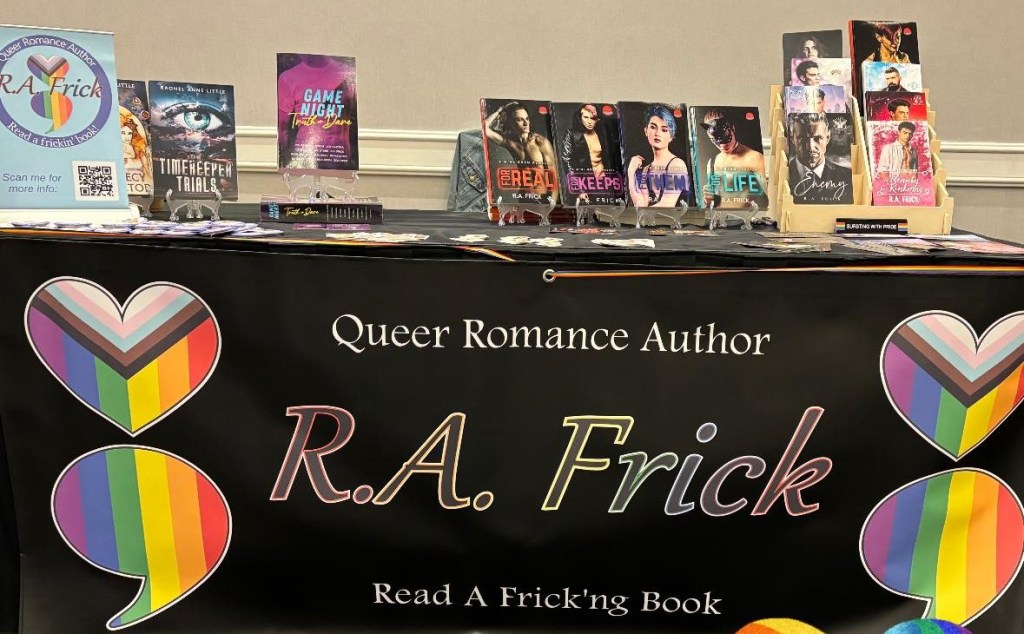
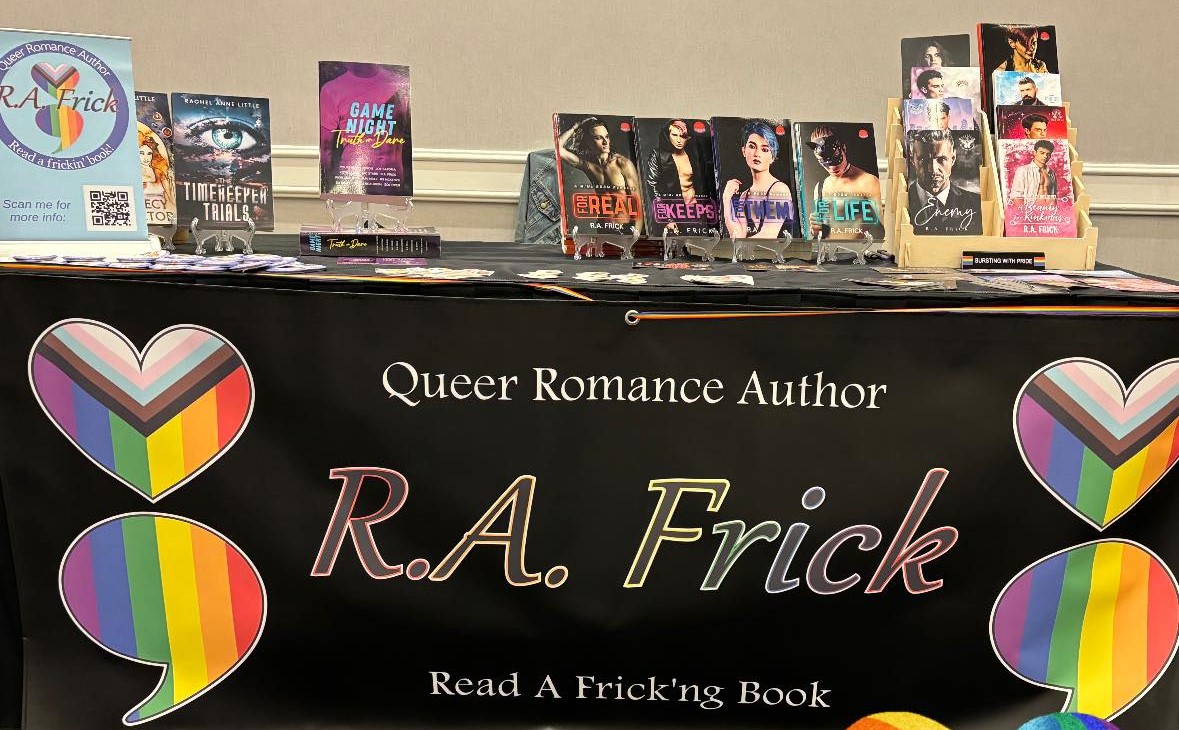
The first week of Pride month has been packed, and the rest of the month looks even busier. I attended the Hot & Steamy Book Event in Portland, where I met a ton of great authors and lovely readers, many new to queer romance. I look forward to going again next year. Here’s my booth, and I’m so thankful my spouse came with to help set up and be my PA for the event!
This week has been all about getting words in to finish my next release, and the end of the school year. My gremlins are going into sixth and eighth grade, and I just finished the hardest year in my fifteen years in Education. I did agree to do Summer School, but that’s easy compared to my past ten months. My classroom is cleaned out, words are flowing, and I’m ready for the month/year ahead!
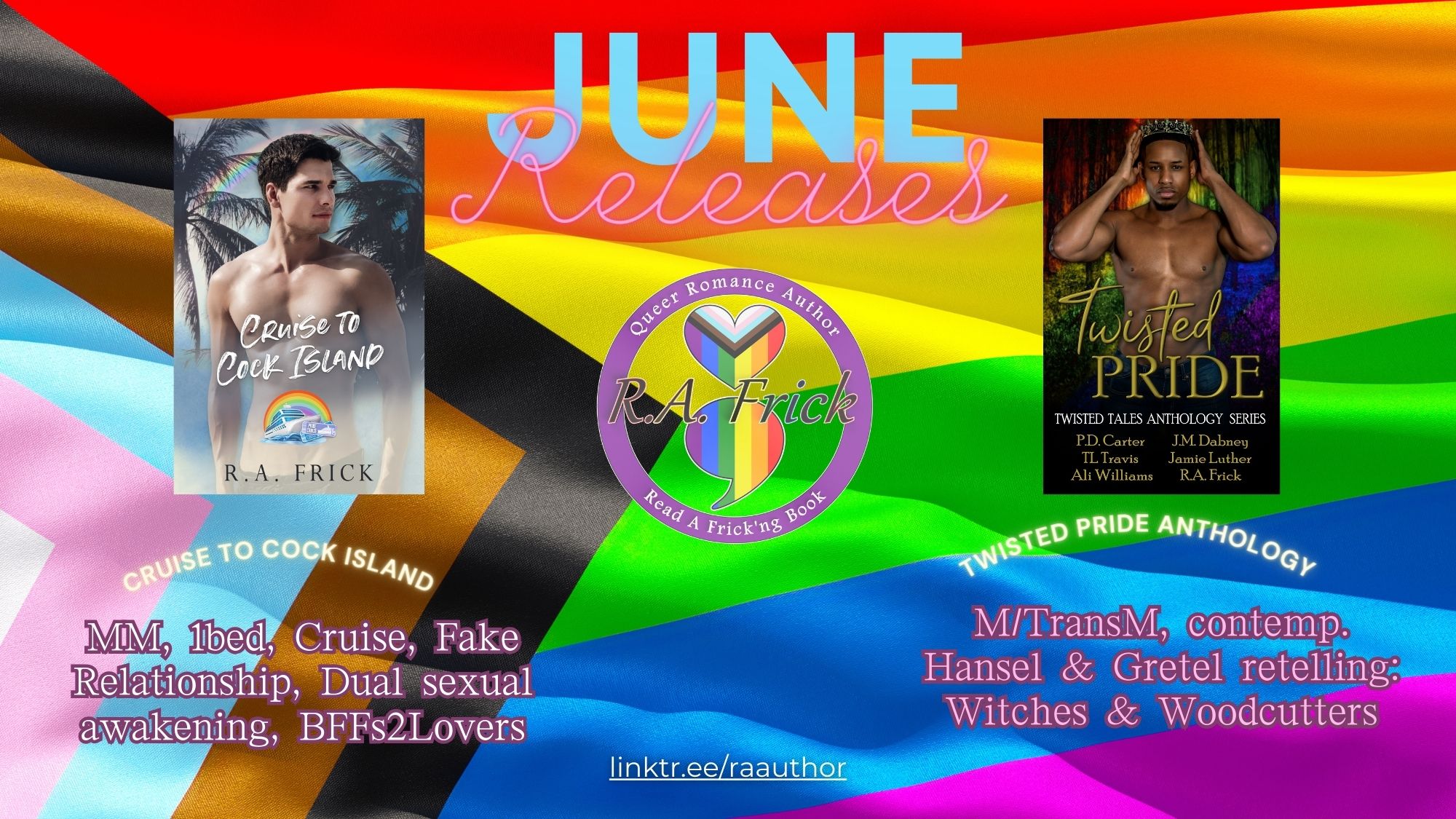
🏳️🌈 Check out my releases this month: 🏳️🌈
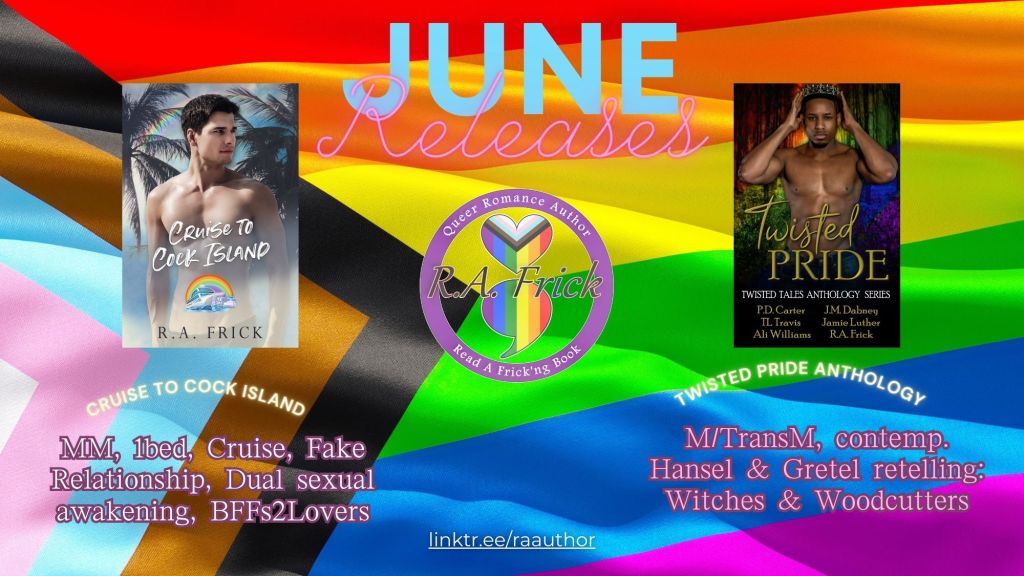
What else is happening this summer for RA? All the things!
🏳️🌈 June RoMance Book Box: Happy Pride is feature in the Book Box for LGBTQ+ Adversities, with a trans sub trying to get out of an abusive BDSM relationship, pet play, and corgis at the Pride Parade! Get it here: https://diannaroman.com/shop-1/ols/products/romance-box-jun-2024
🏳️🌈 June 10-16: 99c/99p sale for US and UK on HAPPY PRIDE, along with many of the other Pride Pet Play books from 2023! It is 99 cents the first two days, then $1.99 for two days and so on, so catch them early! https://mybook.to/HappyPride
🏳️🌈 June 14-15: Pride Party in Dianna Roman’s Rascals Facebook Group, with author giveaways, games, and charity going to raising funds for the Center on Halsted, a Chicago-based LGBTQ+ Community Center. The group is here: https://www.facebook.com/groups/romansrascals/
🏳️🌈 June 19: Release day for CRUISE TO COCK ISLAND is an MM Fake Relationship, idiots-to-lovers, dual sexual awakening, contemporary romance on a Pride Cruise! Preorder here – https://mybook.to/cruisecockisland
🏳️🌈June 19th – 21st: Blind Date with a Book Summer event in MM and MMM+ Romance Reviewed Facebook group, where you can entre to win a ton of ebooks!
🏳️🌈 June 26: Cover reveal for AFTERCARE AT RANDY’S, part of the Trans Romance collab series, Diner Days. I’ll post on this site as well as in my Facebook group and other socials, but see it first in the Diner Days group: https://www.facebook.com/groups/dinerdays
🏳️🌈 June 28: Release day for the Twisted Pride Anthology, which includes my Hansel & Gretel retelling, Witches and Woodcutters, featuring a Trans “Rhett” and his hunky neighbor the Woodcutter. Preorder here – https://mybook.to/TwistedPride2024
And where will I be in June 2025?
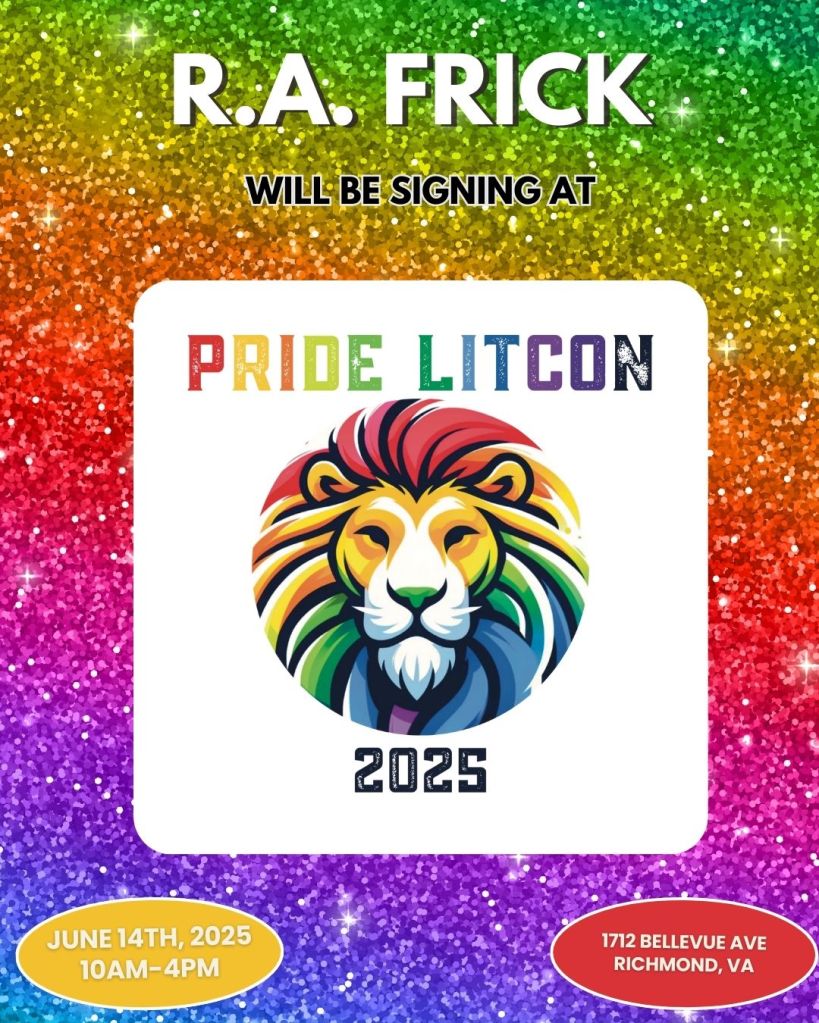
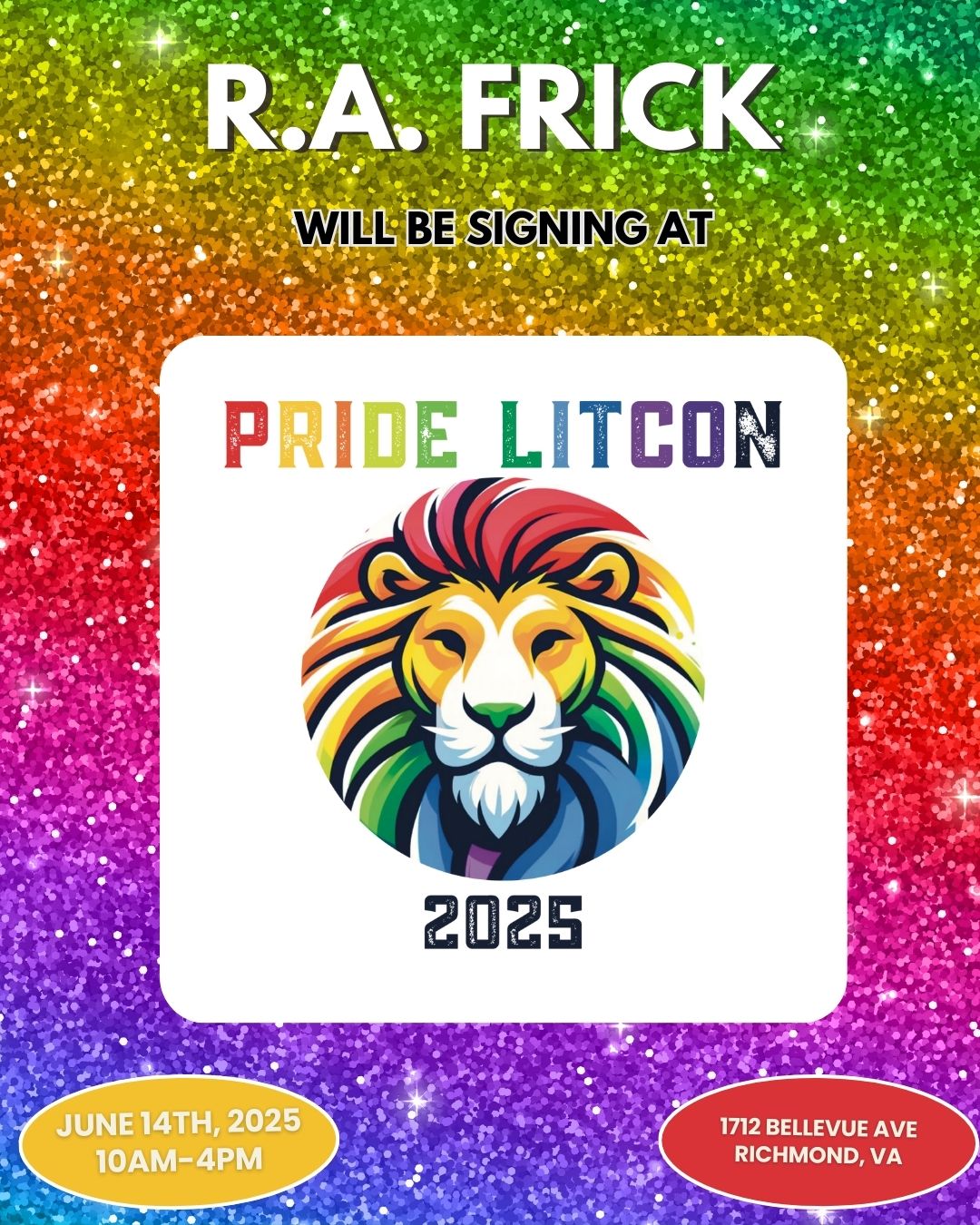
🏳️🌈 I’m signing at Pride LitCon in Richmond, Virginia, June 14, 2025🏳️🌈
🏳️🌈July 14 (11 months ahead so you can plan travel): Tickets go on sale for $25 until September 14th, at which time they will go up to $35
While I’d love to say that’s all for now, folx, I’m sure I’m missing something… Make sure to follow this site and my Facebook group so you get updates first!
- Facebook: https://www.facebook.com/groups/queerfricktion
- Linktree: https://linktr.ee/raauthor
- Website/Newsletter: https://rafrickauthor.com/
- Instagram: https://www.instagram.com/@rafrickauthor
Stay Kinky
R.A. Frick
-
It’s Game Time!
Happy Fricking Friday!
 Game Night: Truth or Dare Anthology is out now!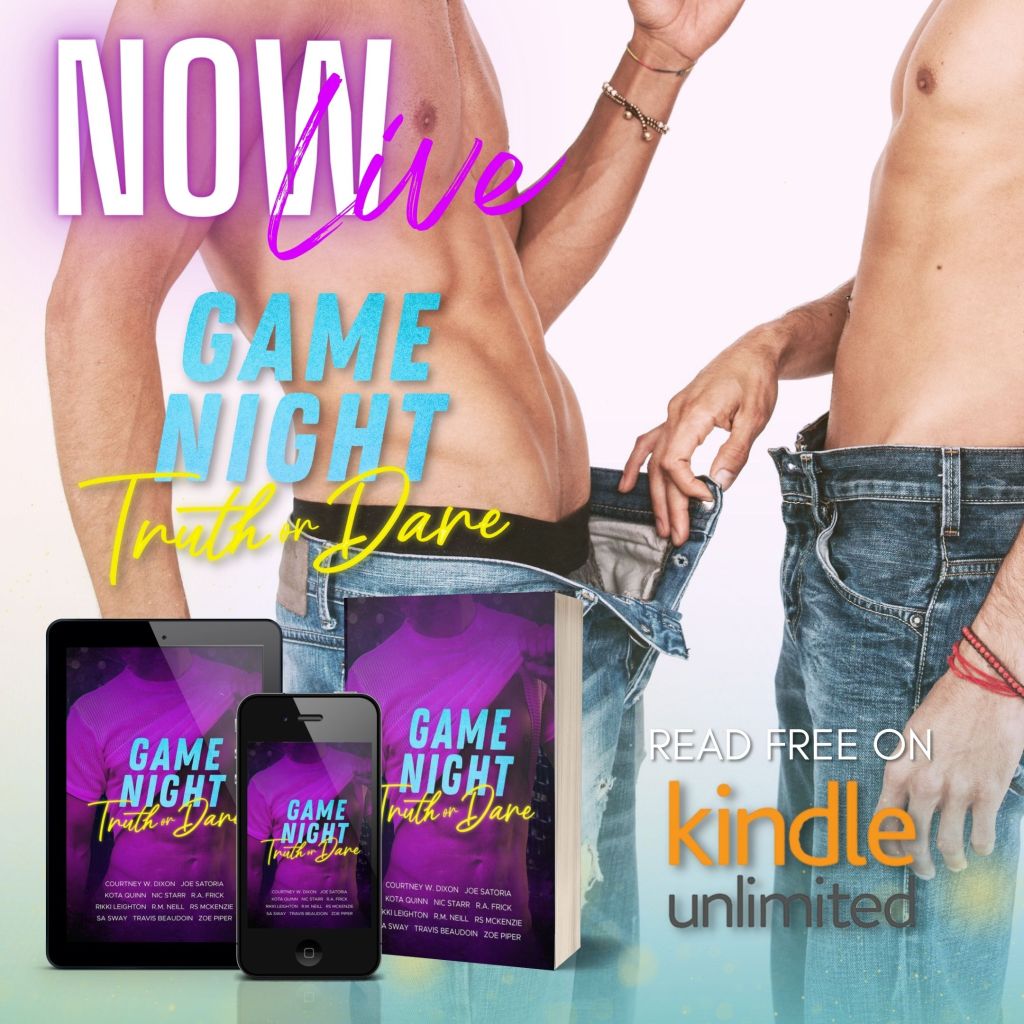
Eleven of your favorite LGBTQ authors are bringing you hot, new stories from one of your favorite party games…Truth or Dare!

Take a ride on the wild side and enjoy fourteen fresh stories, all with a different take on this go-to party game. From sugary sweet to red hot spice, come join these authors as they show you what can happen when you choose truth or dare.

Get it on paperback, ebook, or read in KU: https://mybook.to/gamenighttruthordare

Size Queen is my 17K word novella in the anthology with a bit of Cinderella and a lot of fun:
Miles O’Donnell was a graphic novelist and comic artist in San Francisco. With rainbow hair and a sassy personality, Miles never had trouble getting attention. Unfortunately, most couldn’t satisfy what he really needed…
Shane Long was an engineer who just turned forty and wasn’t sure there was a partner out there for him when they all complained he’s too big. Until a chance meeting and a game of Truth or Dare put a certain size queen in Shane’s path.
Can a game night bring these two together? It might take more truth than they expected to share.

Authors include:
- Courtney W. Dixon
- Joe Satoria
- Kota Quinn
- Nic Starr
- R.A. Frick (Me!)
- Rikki Leighton
- RM Neill
- RS McKenzie
- SA Sway
- Travis Beaudoin
- Zoe Piper
-
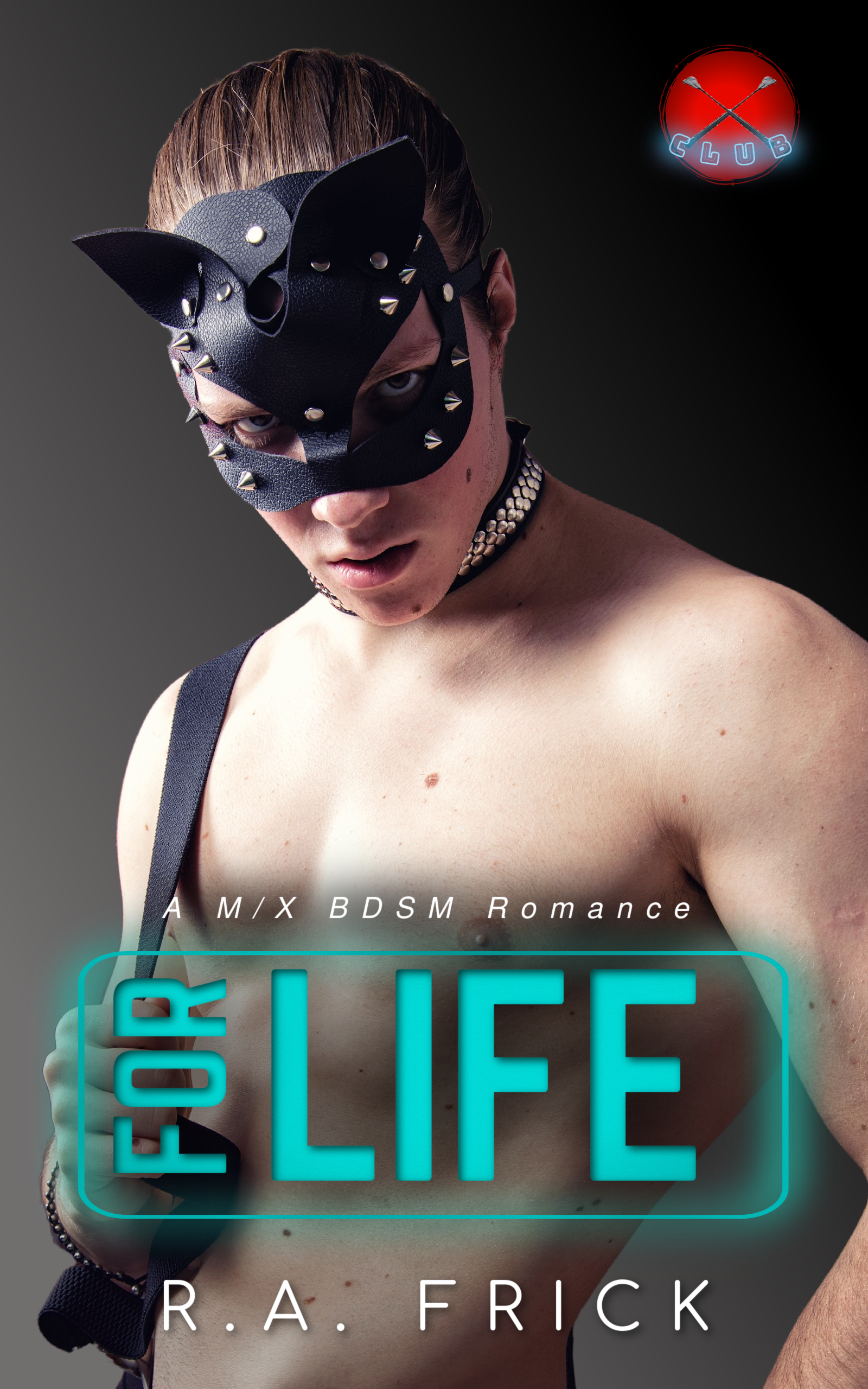
Cover Reveal: X Club Book 4
Sub-title: An M/X BDSM Romance
Series: X Club (Book 4)
Releasing: September 19, 2022

Pre-order Link: getbook.at/ForLife 
Amazingly steamy cover by Jamie Luther of Luther Designs.

Blurb: Police Officer, Maxx Wu, has never explored BDSM but is certain he’s a top… and maybe a Daddy. A not-so-innocent kitty, Anthony “Ant”, might need to teach him a few things about kinks and how you can always have more.
When Ant witnesses a crime by a dirty cop and the Russian Mafia, all they see is that Ant is Italian, and they think he is in the mob. Wanting to stop the dirty cop and protect Ant, Maxx puts them into hiding knowing he will likely lose his career.
For Life is an M/X BDSM Romance with primal kitten play, forced proximity, mafia families fighting, and two tops learning to improvise and compromise.
#CoverReveal #mxromance #queerromance #nonbinaryromance #rafrick
-
I am Not a Survivor
It’s my 28th birthday. And I’m contemplating writing a memoir. To do this, I need to face some hard truths about my childhood. Thinking about how open and honest Jeanette Walls was in Glass Castles, I wrote down the hardest part. It turned into a sort of poem. This is not easy to write, or read, but I’m sharing it in hopes that others identify with my truth.
TW: Trigger Warning for mentions of molestation, rape, and abuse.
When people learn about my childhood abuse, they usually have one of two reactions: Shock or pity.
I understand the shock from people who were never abused, or are still naive. The can’t fathom how the man that everyone liked, who raised me as a second father from age four on, could have hurt me sexually. They really can’t understand how it went on for over four years while I was in 6-10th grade (11-15). Or how it happened to boys as well (“But he’s straight?!”).
There’s also the shock that I’m not a hooker, nor was I a pregnant teen, or ever on drugs. I get this reaction. It’s what they hear on the news, and drama TV shows, as what happens to girls like me. I nod and say, “Yep, I turned out alright,” before moving on to a more comfortable topic for them. Perhaps my multiple degrees, or happy family life.
I get the pity too, though I can’t stand it. Sure, feel sorry for me, whatever, shit happens. It is a sorry world that this bullshit occurs every day to too many children. But don’t tell me, “You’re a survivor!” Like it’s some big accomplishment for making it through my day.
I am not a survivor. A woman who was raped, assaulted, beaten, and/or molested against her will is a survivor. She survived that incident. Or multiple incidents. She fought her demons and came out ahead, living her life despite her attacker’s attempts to diminish her. She should be celebrated!
But I am not a survivor. I lived my life. I was groomed. My first introduction to my sexuality was from my molester. My step-father. This happened daily to weekly, sometimes with months in between. For years.
But I’m not a survivor. To say I’m a survivor is to put the power in my molester’s hands. I did not survive him, I lived my life. I was a strong, independent person before him, and I am a strong independent person after. I don’t need pity or celebration for my personality, I need friends who know sh*t happens, and don’t care.
I am not a survivor, but I’m also not unchanged. He is in prison for a minimum of 20 years, max 30. At 62 and in bad health, that is a life sentence. But I still have intrusive thoughts. I still can’t imagine being intimate with a bald or overly hairy man, let alone anyone who is old enough to be my father. The smell of cigarettes or old spice gives me hives. But I’m so thankful to have a loving and supportive husband who gets these things and helped make me whole.
I am not a survivor. I am a strong, independent woman, who doesn’t take any crap. Because I know how shitty life can be if you let it. Don’t pity me, don’t celebrate me, see me.
-
My Writing Process
The idea of the #MyWritingProcess blog post is to get to know how other writers do what they do. I thoroughly enjoyed reading others’, so I’m doing my own (if anyone cares or wants to do one too). I stole this from The Brazen Bibliophile and The Write Shadow. Both awesome bloggers and tweeters, so check them out! Here is the quote that’s supposed to be included with the blog post:
“We writers share these things, but informally during workshops and at conferences (and, for a handful of established writers, in printed interviews), but not so much through our open-forum blogs. With the hashtag #MyWritingProcess, you can learn how writers all over the world answer the same four questions. How long it takes one to write a novel, why romance is a fitting genre for another, how one’s playlist grows as the draft grows, why one’s poems are often sparked by distress over news headlines or oddball facts learned on Facebook…”
What am I working on?
Writing curriculum for seventh grade World History! Oh, that’s not what they meant? Well, it’s still what I’m currently writing and a good example of what gets in the way of writing novels! I haven’t written anything new in nearly six weeks, which is rather depressing for me…
Right now I’m doing a third round of edits on my Native Fairy story. I did the first round (spelling, punctuation, and grammar only), while writing. I did the second round in the months after I finished (word use, continuity, added needed scenes or lines, description, etc.). Now it’s my editor’s turn! I’ve actually been avoiding them; bad writer! I keep telling myself it’s to give myself some space from the story, but really I think I needed a break after five months straight of writing and editing and querying… You get my point! Also adding 20-40K to my Timekeeper novel. Will finish edits by next week hopefully so I can start one of the dozen plots I have waiting!
How does my work differ from others of its genre?
Native Fairy centers around Native American Folklore, with Gaelic and Faerie myths as well. I tried to weave in History and mythology from around the world with thoroughly modern characters. I’ve been told it is a Native American YA Percy Jackson! I have always loved mythology, especially when an author took it and made it unique. But there is a serious lack of Native American stories in writing, let alone any diversity in YA. Its urban fantasy, but minus magic wands or vampires and werewolves.
Why do I write what I do?
Growing up, I preferred female authors and main characters, but they rarely go on adventures or are relegated to being the sidekick. Ender and bean went into space to fight Aliens. Harry fought Voldemort and many other adversaries multiple times while also growing up and doing well in magic school. I want my girls to be strong and smart, but also good friends and fall in love. I want them to be the “chosen one” without ever mentioning prom or getting married. I want them to seek revenge through violence, rule a country without needing a man, and generally kick ass even though their name is Genevieve or Elise. I want them to grow as people, so my readers can learn form them.
How does my writing process work?
An image in my head is almost always first, followed shortly by a character. With The Timekeeper Trials, I saw a young woman standing at the window, overlooking a desolate land as she is told she was chosen. Then I plotted out the world and the supporting characters and started writing. Research is also a huge part. I want to see images of clothes and places. Love hotel tours and google maps! With Native Fairy, it was a scene. I saw my main character as a young girl cutting the tips off her ears after being adopted. That scene became a memory in the first two pages of the story. With the next book I want to write, it was a concept. What if all the fairy tale characters were really crazy and lived in a mental ward?
I prefer to write in the afternoon, when the light is great for typing without a lamp on, and I’m well fed and fully awake. I have never written anything down on paper. When an idea comes for a scene or line, I use my voice recording app on my phone. It takes me two-three months to write a whole novel, then another month or two to edit it. I edit as a I go, usually a chapter or two at a time, but also make sure my editor has them as soon as they’re done. She’s great at seeing plot holes. So it works, when I have time to sit for hours on end!
I hope you enjoyed my writing process! Share yours in the comments or post your own!
-
Just Right for Writing
As soon as I started writing, I had to write more. It was in my blood. But I’m a busy person, so the question became when and where do I write?

Do you have a local coffee shop or maybe even a home office to write in? When I hear writers (and readers), talking about chilling at their favorite coffee shop, I’ll admit, I get jealous. For one, that they have the option to. As a busy mom in a small town, I have two things working against me. There are very few places to go (there isn’t even a Starbucks in my county!), and it’s hard to get away. So, I spent months in search of a place that fit!

After attempting to write in local coffee shops (Too many people!), almost every room of my house (too much noise), and outside (too much weather), I found my classroom office to be just right. But only if no one is around. There is almost nothing worse than being in the zone while writing, immersed in a world that only exists in my head, and getting interrupted. At home, my husband will watch the kids so I can tuck in bed and write for hours, worry free. At my classroom office in the summer, the same applies, plus I can blast my music and eat junk food. I try to do a balance of these two locations.
Have you found places you just can’t function? For me that is around my kids. All I can do it watch them. I even attempted a writer retreat, by taking my kids to an in-laws house where they would be cared for while I wrote. Except, I worried about them and checked on them constantly because I could hear them. I ended up doing more reading than writing because it was easier to pause! If there is a place or situation where you can’t write, don’t try to write there. You’ll just be frustrated and it will not work creatively.
Can you write on anything and add it later? I can’t. I have never written a single word from my books or plots on paper. I type it all. That means I need my laptop. Another limitation. The only exception is that I sometimes record ideas with a voice recorder app. Sometimes I don’t even need to listen to it back, just the act of recording it helps cement the idea. The weirdest part is listening to my ideas from weeks or months before! I can hear how excited or tired I was. Whether it is post-its or a voice recorder, find a way to get ideas down when they come!

Do you have a “just right” place for writing (or reading, drawing, plotting, etc.)? Finding that space may not be the most important part of your creative process, but it is highly influential on your output. Wherever your time or place, do what works for you!
-
A Synopsis
Since last month I delved into what an excerpt is, and shared one from my own manuscript, I thought today I would get into the Synopsis! In general, a synopsis is a summary or outline of anything: play, movie, tv show, the accident you had last week… But I want discuss book synopses, and specifically, how to write them. Before you can query your book, you HAVE to write a synopsis. And that’s where it gets difficult.

When I outlined my first book, I had no clue what I was doing. I had a clear picture in my head of characters and the world, and what they were trying to accomplish. I didn’t have an ending or a background in English Lit. I studied History and Education in college! What I did have was 20+ years of loving and reading every book I could get my hands on. The downside is that I hate synopses because I feel like they give too much of the plot away! If you don’t catch me in the first half of your synopsis (When I stop reading), I’m not going to read the book. But how do they summarize 60,000-120,000 words into one-two paragraphs?

If you think someone at the publisher has this job, you would be wrong. It’s your job, as the writer, to summarize your own work so you can sell it! Ironically, after I had written and re-written my synopsis at least a dozen times, with different lengths depending on Agent requirements, I found this site by Mark Gilks: How to Write a Synopsis. While I couldn’t use it for my manuscript, I could use it for my writing in progress. And now you can use it!

After you have gone trough your original outline, writing down key points, and possibly following Gilks instructions to write something from every chapter, you should have a lot of information left to summarize. That’s when I suggest looking at the comps (yes, like in real estate, I watch a lot of HGTV). If you see what successful books in your genre do, you can emulate that in your own story. Is that plagiarism? Of course not! Your story is your own. But, you can see what some successful books that you have enjoyed include and leave out. If you haven’t read successful books in the genre you’re writing, start now. Call it homework, but it is a must!

Now you have a rough outline, share it with people! See if they ask questions. And don’t sigh dramatically because they would understand if they just read your book. The whole point is to explain just enough to draw them in. For instance:In a post-apocalyptic world, Elise craves an adventurous life beyond her safe home. Outside lies the danger of radiation poisoning, but also opportunity. Elise lives in the West Community building in Dystopian Denver, but dreams of moving to the Royal Palace as an adviser. What she doesn’t dare hope for, becoming the next Timekeeper Queen, may be a possibility. On her seventeenth birthday, Elise is chosen for the Timekeeper Trials. She will be able to travel back in time.
Leaving her family and best friend Ames behind, Elise is isolated and worried about assimilating to her new life. After making a new friend in fellow competitor Suzy, and meeting Prince Leo, Elise starts to feel like she can fit in and accomplish anything. But as the trials get harder and the royals get meaner, Elise doubts her capabilities. The Queen’s daughter makes it her personal mission to keep Elise under her thumb so she that she can be the next queen herself. Elise rises above the adversity, for the thrill of time travel and to reach her full potential.
Leaving the safety of the community causes her to panic and reveal her weaknesses to those who most want to stop her, including the Queen. Elise discovers that she can overcome her fears and find strength from within, so long as she stays focused. The Queen tempts Elise to stay away from the Prince and keep quiet about her own subterfuge by giving her information on her biological parents. Elise continues to the more difficult trials, but she begins to learn that there are truths yet to be uncovered.
Do you want to read more? Good, I’m trying to find an agent! That was the result of a dozen edits and much feedback. It includes the main character, her age, her setting, her wants, needs, and struggle, as well as a bit of the plot. Let’s compare it to the synopsis of my manuscript that has had no feedback:
When 18-year-old Nery meets the cute new boy, Hart, she finds out there is more to her than just being adopted and living in a small town. He knows about the leaf-shaped birthmark on her thigh. Nery learns she is from a line of Native American little folk who are in tune to the magic of the natural world. Not only that, she also comes from a long line of Irish Faeries who rule the Seelie court.
Hart searched for years to find Nery, and she must trust him when he tells her about her past. Nery meets her real family the same week she graduates high school, without telling anyone but her best friend where she is going. Before she can come to terms with what she is, Nery is set on a journey by her Grandma, the Clan Mother. Nery and Hart must go on a quest across North America to find tribal items of power. Someone is trying to steal it and they are the same group responsible for the death of Nery and Hart’s parents. If they fail, all native tribes will loose their magic.
Since I haven’t written the last two chapters, I can’t even say for certain I know the ending! But the whole point is to start somewhere. Even if you are going to self-publish, this is an essential step. Go forth and synopsize! If that’s not a word yet, I claim it. And hey share your synopsis in the comments!
-
What the heck is YA Speculative Fiction?
I get this question from nearly everyone who asks about my writing. People read books in the genre they are accustomed to, based off the recommendations of friends or their e-book store, or simply because they liked the cover art. The exception is other writers, publisher’s, agents, librarians, and book bloggers. We have to be in the know, because we are writing, selling, and stocking these stories based on what’s inside. What I did not know before delving into the writing world, is that the books I read have an entirely different labeling system to agents and publishers than they do in the bookstore. You see Fiction, Non-Fiction, Science Fiction, Mystery, Comedy, and Drama, but there are dozens more!
Many people have a favorite genre, but I’m a true bookworm. I read classics in Jr. High (L’Engle, Austen, Montgomery, Bradbury, Twain), SciFi in high school because a boyfriend suggested Ender’s Game, and then satire or fantasy in college to escape my History and Education texts. Harry Potter was my own little world from age 12-20 when the series ended. I’d read all these favorites a dozen times each, and rarely picked up new authors without a recommendation from someone else. Then, the summer I got engaged, I was struck by the simple and beautiful covers of the Twilight series. I devoured the first two overnight, and even tried adult vampire stories, but didn’t like them. Suddenly, I was a fan of Young Adult novels. A huge fan. So much so that when I started to write, all my ideas fit in this genre. That is when I learned the many distinctions and nuances in fiction.
So, how do you explain a whole book to people outside the novelist bubble when you are used to doing it with acronyms? Most people don’t even know the word for novel in the publishing world is “trade.” I’ll admit, before I started wring a speculative fiction novel, I only knew them as Dystopian. This is such a new word in our ethos that spell check tells me to change it to Utopian. Simply put, Speculative Fiction, or SpecFic, can technically be Utopian and Science Fiction, but it is most often represented on Earth, in the not to distant future, usually characterized by a re-formed but overbearing government (Think The Hunger Games, Matched, The Giver, or Divergent). For some reason, these highly popular stories have skyrocketed in the media. Maybe that could be The Hunger Games having such good movie adaptation the reached a broader audience who then clamored for more. Whatever the reason, YA SpecFic appeals to many people today.
 First thing, Young Adult is not a genre. But it kind of is. But it’s really not. It is fiction (literary or non-literary) that is written, published, and marketed to adolescents. It used to be called Juvenile fiction, which is why I didn’t read it in high school. According to Publisher’s Weekly and many other polls I have seen and agreed with in the past few years, more than half of YA readers are over 18. Often, books are put in YA based on the characters’ ages, even though many of those books would really be Middle Grade or the emerging genre of New Adult. Does the book have sex described and not just implied? New Adult. Does the book have characters that haven’t realized girls are pretty yet? Middle Grade. Somewhere in between? Young Adult.
 And this cuts to the core of what YA is: any story where what keeps you reading is the character growth. Technically, YA is defined as the plot being emphasized instead of theme and style, but I believe the themes are just different than novels written for and about adults. The point of your later teen years is how you learn and become a full person, encountering problems and experiences for the first time. It doesn’t matter if it is the classics works of Oliver Twist or Huckleberry Finn, fantastical drama series like Lord of the Rings and Harry Potter, or critically acclaimed modern pop favorites The Fault in Our Stars or The Outsiders, they are all good books. So what is YA? Books for people who like to read about the in between times in life. Occasionally set in a fairy land or Post-Apocalyptic America…
Do you love YA? Hate it? Don’t get it?
-
From Book Idea to Finding an Agent
It sounds simple: You have an idea for a book, whether Fiction or non-fiction, literary or commercial, so you write it. After that you send it to a publisher and they take care of editing, publishing, and marketing the book. No?! Well, that’s what I thought before I wrote my first manuscript. One day, not so long ago, I finally wrote down an idea I’d had for months, and both my husband and a friend said, “Why don’t you write the whole book?” I’m still looking for an agent and keeping my fingers crossed on the partials and full requests I sent out, and thought I’d document what I’ve done so far in case it might help other writers…
First, get an idea for a book! That’s sounds easy, but don’t stop there. Research! Has this story been written before, is it completely unique, is it in an emerging genre, is it overdone? Goodreads is the best place to do research! Plot, build your characters and setting, figure out your main characters conflict and goal. Is it a short story after you’ve got a plot, or a whole series?
What will your age group be? This sets the tone. In fiction there are Children’s, Middle Grade, Young Adult, New Adult, Adult, and a few niche categories. This is not about the age of the characters, it is the age group who will most want to read it. Of course, I still love Harry Potter and The Fault in Our Stars even if they aren’t “meant” for a mom in her late twenties. You’re generalizing to sell the story, but also to guide the language and situations in a book. As for genre, that is completely based on your story and there are far too many to enumerate, so I link you to this very long and helpful list.
Write. No, seriously. Write as often as possible. If you have free time and you’re nor reading or researching for you writing, you should write. I try not to let 3 days go by without writing, since I’m a busy mom and teacher. For you it might be setting a time that you write every day or once a week.

Join social media if you haven’t already. Twitter has an amazing writing community. Also, you can use the #amwriting tag to meet other writers and share the writing experience. On top of that, you can follow the tag #tenqueries to see posts by agents about why they chose or rejected the queries they have received. You can also follow them if you want. There is also the #mswl tag for agent and publishers manuscript wishlists!

You will need a short synopsis (2 paragraphs) you might find on a book jacket, as well as a longer one (1-2 pages) that details the plot for agents and publishers. But “what if none of the agents I want to query ask for a synopsis?” you say… Trust me, you need those synopsis. It will become a big part of your query, as well as helping you see anything missing in your plot. It helped me see I needed more conflict in my story!
Get beta readers and/or an editor, stat! Easier said than done. First there’s the apprehension that comes with being new to writing and having a stranger read your work, then there’s the finding of said editor or reader. My beta is also my editor, and she is trying to expand into a new field, so she does it for free. Plus, she did my paper edits in college, and as a paralegal gets paid to check for errors. She’s my awesome aunt. Not everyone can be so lucky! You can pay for edits, but I’d start with a trusted family member or friend that has impeccable spelling and grammar do a once over if you are short on cash. An editor is better, but every edit counts! Beta readers should be someone who won’t just compliment you blindly. You need good feedback. Again, social media (Twitter and Facebook) is a great place to start!
Join workshops and write your own Query. These aren’t always available, but some stay up for you to look through. Here is The Write Shadow’s #JustPitchIt Query workshop that helped me immensely.

Enter contests! Pitch and Query contests are important. Not just because you might win, but to get your name and story out there. It also gives some feedback and helps you learn how to market your book. QueryPalooza, PitchSlam, and QueryKombat are three examples in just the past two months. Some are recurring annually or biannually. Agents join these and make requests. Some people get published from fun twitter contests! There are also writing contests, but those often require a small fee.
Research Queries online and write your final draft. Some agents are very specific, so pay close attention if they have a particular format. Here’s a rundown of places to go:
- You absolutely must start with a Query Tracker search! You can filter by genre and those not closed to submissions. It lists all sites you can find them on, including their agency website, accredited agent sites, and current clients. My favorite part is when they have comments. Do they send a form rejection letter from their iPad within hours, including a link to their own book? Or do the send a personalized rejection with helpful critiques three months after anxiously waiting?
- From the Query Tracker agent profile, I review their AAR page, if they are a member. If not, follow the link to Predators & Editors to see if they have any red flags attached to their name or agency. AAR isn’t necessary, and many reputable agents aren’t on it. If they are, it looks like this.
- Social media access is important to me, since I’m active on it. I sometimes follow if they are on Twitter. This shows they use social media as a means of connecting and marketing, which is how the world works now. Also, If an agent only accept paper queries, I take them off my list. If I had to print out queries and my first 5-10 pages or 1-3 chapters every time, it would waste a ton on paper and postage!
Once you have a list of agents to Query, it’s time for submission! I made an original list of 20 I liked off of Query Tracker, then narrowed it down to 10. With a few agents requesting a query from contests or pitches on twitter, I have sent out 15 total in two months. I try to send out 1-2 a week. You need to change them a bit for each agent to make it more specific to them. Some agents have very specific requests for font and format, how much of your book they want a sample of, and where to send it. Others simply want the letter emailed to them and nothing more. The most important part is getting their name right after the word Dear. First impressions matter! On one query I left the words “agent information” at the top where I sometimes include address and agency. Which is the last lesson, proofread every single word at least three times!
If you go this route with no results for a whole year, I’m going to suggest the two options I’m considering: 1. Shelve this story and finish writing/query my new book. Every time you write, you get better! Sometimes your first book isn’t meant to get published. Maybe it’s not right for the current market, but you can revise and come back to it some day. 2. Self-publish. While I support both traditional and self-publishing, I chose to go the traditional road. I want to see my book in print, without paying for it myself. That said, I would still pursue self-publishing as an e-book if it doesn’t get picked up. Who knows, publishers buy un-agented, self-published books more and more these days!
Are you trying to get published? Already found an agent? Either way I hope you found this helpful! What’s your road to publishing story?
-
Writing First Loves
In both my completed manuscript and WIP, my characters start to fall in love for the first time. They’re both YA, what do you expect? Your teen years are for experiencing new things, and falling in love is a big one. But if you write YA, you could encounter one of two problems. These problems are likely only problems to you. Like I said last week, we writers are our own harshest critics.
The first common problem I have heard, mostly from teen writers, is that they have never been in love so they are speculating on how it might feel based on observations and reading. But then, I’ve never traveled in time or done magic, and I have my characters do those things. Once again, this is probably only a problem to you. People write on topics they’ve never experienced every day. I remember being shocked that the author of Memoirs of a Geisha was in fact a young American man. I wasn’t shocked that Orson Scott Card hadn’t attended Battle School or fought aliens. While falling in love is lovely, pun intended, I don’t think it is a prerequisite for writing about it. Plus, you could fall in love while writing it or after it is finished, and go back and edit it with personal feelings. Describe your own first kiss, and really know how it feels.
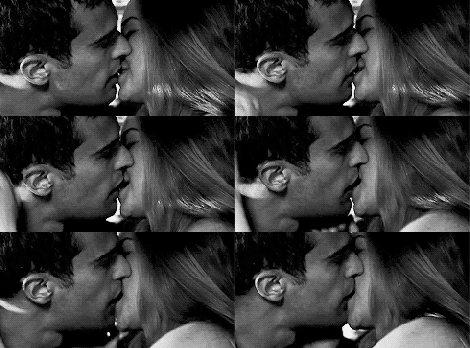
The second problem with writing falling in love scenes, is if it happened a while ago. I fell in love with my husband almost 10 years ago. Some authors fell in love, then fell out of it and are now disillusioned. Does that mean they can’t write a sweet love story? Absolutely not! I look back now and laugh at myself for the unnecessary fear I had when I started writing. Yes, it had been a long time since I felt those first stirrings of love, that precious first kiss, but the job of a fiction writer is to create.
An unexpected benefit of writing about first love, is reminding me of all the reasons I fell in love with my husband of eight years. Beyond his black hair and green eyes, his strength and calm that only add to his wit and sense of humor. Our wedding anniversary is in two weeks, and I find myself wanting to be as romantic and sentimental as the fictional characters I love so much. For the eight days leading up to our anniversary, I am going to send him a song that reminds me of our relationship, with our wedding dance song and the full playlist on the last day.
We tend to over think things that we feel we ought to have experienced, and think nothing of making things up. Pulling on my own life experiences, mixed with a unique world and endless research, is how I write. Do you add your own personality and feelings into your own stories? Have you ever felt the irrational fear of writing about something you have yet to experience?
-
Confidence or Lack Thereof…
Writers are a rare breed who can simultaneously think we have the most amazing ideas that simply must be shared with the world, while also feeling crippling self doubt. How can such a huge group of people think they are both awesome and ordinary?
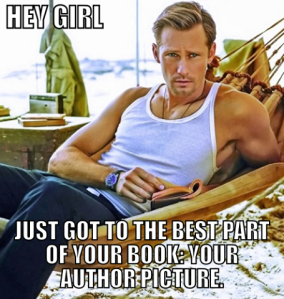
For writers with serious self-esteem issues, you will hear that it was the characters who led the story, not them. A family member told me I must have based the main character in my story on myself, since she was so smart and loved to read. While that was a nice compliment, I got very annoyed! My characters are fully formed people in my head, with hopes and dreams as well as flaws and problems. Sometimes, they surprise me…
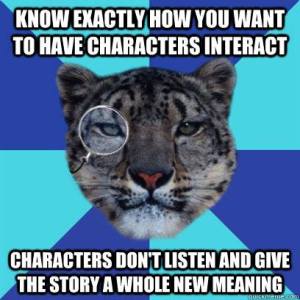
I wrote my first full manuscript in two months, including a second draft that had all spelling, grammar, and syntax edits done. How? I sent in 2-5 chapters a week for my editor. I’m my biggest critic. I reread far too often and can never take a compliment. Half the time I think it’s good, the other half it’s crap that should be deleted and never read. Without my editor giving me both positive feedback and helpful critiques for my first manuscript, I never would have had the confidence to write a second!
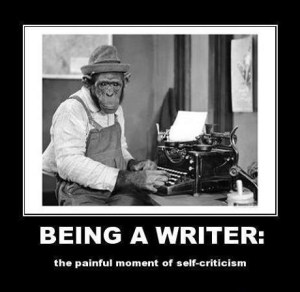
So why does it matter? If you have too much self confidence, you can’t take critiques and your story will suffer. If you have too much self doubt, you will keep deleting and editing until you lose your way in the plot and the story has been stripped of all value. Sometimes, it is best to just write, ignoring spelling and word choice. You can go back!
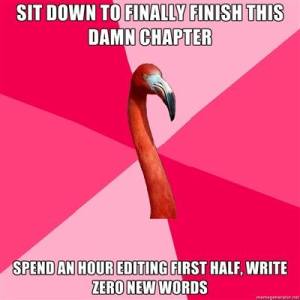
So when someone asks you when that little story you’re writing will become a movie, just smile. They don’t know that inside you wages a battle: That would be so cool to see my characters come to life! Not like I’ll ever sell my book. I would want full control of script and casting! No, it’s not a good enough story to make a movie. I’d make a lot of money and could write all the time! I can’t even get an agent, no way my book will be popular. My story is far to full of plot and characters for anyone to make a movie of. Why does it need to be anything but a book? Will people think it sucks and I’m a failure if it doesn’t at least become a TV pilot? Screw you and your stupid question!
So maybe you’re not on a never-ending see-saw of emotions and you can separate yourself from the writing process and your characters. But you are probably in the minority. At least
I hopeI think so. Please tell me I’m not the only one?amwriting, author, books, characters, confidence, memes, self esteem, wip, write, writer, writers, writing -
Book reviews and Ratings
All readers have their own way of reviewing a book. Brutally honest, overwhelmingly positive, full of gushing praise with gifs for emphasis, or always negative
because you hate everything. Book bloggers are often lucky to get free ARC’s, Advanced Reader Copies, of books to review. Recently, I’ve noticed a common opinion. If you receive an ARC, people expect you to be overwhelmingly nice. I know this has to do with bringing an average down, but shouldn’t you be truthful?I have a simple ratings system on Goodreads (also Amazon and B&N), and try to be as complimentary as possible while telling the truth. 5 stars means I put it straight on my Favorites shelf and either re-read it immediately, or buy the sequel immediately. I want everything by that author and perhaps a new tattoo. Maybe not a perfect book, but perfect for me. 4 stars is for a great book that had some flaws, such as too many narrators or a narrator lacking depth, or missed words/errors that it took me out of the story a few times. I might read it again, definitely want the sequel, and will check out other books by the author. 3 stars for me is the hardest. It means the book was good, but not great for me. I finished it quickly, and possibly want the next in a series or another by that author, but I wouldn’t suggest it to someone who likes the same books as me. Good, but probably for someone else. 2 stars is seen as offensive, and I don’t know why. I’m giving you a nearly 50% rating for a book I struggled to finish. Maybe your concept and characters or good, but I had trouble with the writing style or plot. You could do a big edit and improve! 1 star is offensive, and I won’t review a book I would give one star to. One star is reserved for rating a product that arrived broken or not at all, and that s how I feel about the plots of books that earn only one star. If I never finish a book because I so disliked it, I just don’t rate it.
Here is an example of a pre-release ARC I rated this week:
“4 out of 5 stars for Gypsy by Trisha Leigh. While the story was complex with new terms and characters from the first page, it picked up quickly and never slowed down. Every time I thought I had a hold in the story, it presented a new twist.
The Cavies, or teenagers with special powers, are a wily bunch of kids with a wife range of personalities. I had a hard time holding on to their multiple names, especially when a whole new group of teens and adults were added. The standout of the group, thankfully, was the narrator Gypsy. While often shy and unsure of herself, she was also introspective and curious enough to be a reliable storyteller. I also loved seeing her navigate new situations!
While I normally dislike present tense, Gypsy was very descriptive of her surroundings, making the story flow. Between the intrigue of her investigating her own powers, and figuring out the trail of cute boys after her, I had trouble putting the book down. I laughed, cried, and gasped throughout and was left gasping to the very last line!
If you like stories similar to X-Men or The a Unbecoming of Mara Dyer, I would suggest this book to you. Leigh still has quite a bit if editing, but this ARC did not disappoint! 4/5 stars for Gypsy, and I can’t wait to read the next Cavy Files story!”I enjoyed the book even though it needed a ton of editing and I normally dislike present tense. I want to read the next one, but probably wouldn’t read the first again. I could have added that the first chapter was mostly unnecessary to the story, but that would have been an opion that helped no one, and that’s the important part of a review, to be helpful. Now let’s look at a review I gave 2 stars because there isn’t a 2.5 star choice. I could have rounded up, but it wouldn’t have been true to my rating system. You’ll see what I mean:
“When I saw the synopsis for The Only Boy I was extremely curious. As a young, passionate feminist, I used to rail about genetics having reached a point which we no longer need the male of our species. As an older, but no less passionate, wife and mother of two boys, I am willing to admit I’d like to keep them around.
The book opens with Mary, a narrator that knows how to paint the scene, then quickly switches to Taylor, who has a secret. We are meant know that Taylor is a boy before he ever speaks. While I enjoyed the concept, there was something off about the first person present tense. My favorite parts were the characters’ memories and flashbacks, as well as quotes the characters read. I realized that was because they were in past tense. If you like present tense, this book is for you! I could see how it was meant to draw you in, see the world from the characters’ points of view, but because it switched between characters every few paragraphs, that was difficult.
As the book progressed, because it was just interesting enough to keep me reading, there were a lot of parallels between what people think men are, and what is actually just human nature. We are shown through the characters words and actions that men and women are more alike than stereotypically presumed.
The story was a lot of missed cues and missed meetings. The two main characters run the gamut of emotions, including thinking they are both in unrequited love with each other after a couple of kisses. Reminiscent of Romeo and Juilet, minus the intrigue. I was annoyed that the girl was constantly trying to be prettier for the boy. Trying makeup and revealing clothes. She also changed her mind every half-day. The plus side of that was that I never knew what she was doing.
When moved to the “Earthers” I found the first truly interesting characters. Characters with depth and back stories that weren’t shallow or obvious. I wanted more of them! The ending of the book was one big climax that was oddly paced. The main characters missed each other a lot, then found each other suddenly, then it was over. The epilogue was meant to confuse until the last page, then ended abruptly.
I enjoyed the idea and the dystopian world, but in the end, the present tense was hard to read. The characters had no depth and seemed to have random development. I kept reading to know if the presumptions I had in the beginning came true, and they did. A third person past tense narrative would have made this book 3 or even 4 stars. As it is, I rate it a 2.5 out of 5″
I could have lied, but that would be dishonest and not me. The reply to my review was, “I really don’t like reading present tense, so your review was helpful to me. Thanks.” So my review fulfilled the purpose of a review, to explain to potential readers why they should read the book.
For the record, his average is 3.8, and her’s is 4.6. I feel like my reviews were not so far out there, but was told the first was too complimentary and the latter too harsh. If you like present tense, try these stories out and see if you agree or disagree. The Only Boy is available in print to order from Barnes & Noble, and Gypsy is available soon. Follow the authors on Twitter, they’re both awesome people. A review shouldn’t be personal, except that you are expressing your personal opinions.
Do you have your own set ideas about what the stars mean?






 R.A. Frick